
Chinese President Xi Jinping called for global collaboration in artificial intelligence development, emphasising a "symphony of global collaboration" over a "solo performance" by any single nation. Speaking at the World Artificial Intelligence Conference in Shanghai, Xi highlighted the need for ethical AI governance, shared prosperity, and addressing challenges like the widening digital divide. He also announced China's commitment to support developing countries with 5,000 AI research projects and training programmes. The event also saw 29 countries sign an agreement to establish the World Artificial Intelligence Cooperation Organisation (WAICO) in Shanghai.

Olympic medallist PV Sindhu has initiated the 'PV Sindhu Centre for Sports Excellence' in Visakhapatnam, with Andhra Pradesh IT Minister Nara Lokesh performing the groundbreaking. This integrated sports and education ecosystem aims to provide world-class coaching, sports science, and academic support across seven disciplines, establishing Visakhapatnam as a national sports hub.

A recent IIT Indore study highlights the evolving landscape of protest sites in Delhi, from Rajpath to Jantar Mantar, and now to more distant locations like Ramlila Maidan, Burari Ground, and CBD Ground. This shift, driven by authorities, raises concerns about the visibility, accessibility, and effectiveness of democratic protests, as moving demonstrations further away from power centres can diminish their impact and public engagement.

Union Home Minister Amit Shah experienced food poisoning during his visit to Karnataka, leading to the cancellation of his scheduled events in Hubballi and Belagavi. Senior BJP leader Pralhad Joshi confirmed Shah's illness but stated he is now "perfect" after suffering weakness from vomiting.

Researchers have developed a new AI model that can monitor satellites and detect anomalies in their behaviour, significantly reducing the risk of in-orbit collisions. This tool, part of the AI4 Space Safety and Sustainability project, learns from satellite light reflections to predict motion and identify unusual activity, crucial for managing the increasingly crowded space environment.
A collaborative study by Indian and South Korean scientists has provided new genetic, anatomical, and ecological insights into the wide-ridged Indo-Pacific finless porpoise. The research, based on a stranded specimen in Kerala, revealed distinct genetic differences from Pacific populations and highlighted significant conservation challenges, including limited protected habitats and anthropogenic pressures.
A new report from Cambridge University Press & Assessment highlights the critical need for Indian policymakers to collaborate with teachers in developing AI education policies. The study emphasizes investing in teacher professional learning and involving educators and learners in the design and evaluation of AI tools to ensure policies are grounded in classroom realities and promote critical AI literacy.

IIT Ropar's ANNAM.AI, in collaboration with Syngenta and Google, has launched 'HACK CORE 2026', a national AI hackathon. It invites innovators to develop AI-driven solutions for critical agricultural challenges like crop health, pest management, and climate-resilient farming, offering significant prizes and mentorship.

The Supreme Court stated it is not inclined to completely ban firecrackers but emphasised the need for authorities to implement existing orders on the ground to combat air pollution in Delhi-NCR. The court highlighted that annual orders become a "mockery" without proper enforcement and urged serious action, public awareness campaigns, and on-ground officer presence. It also noted ongoing consultations regarding the use of Barium in firecrackers and discussed measures taken by the Delhi government and CAQM to tackle pollution, including curbs on vehicles and construction. The court reiterated its stance of finding a middle ground rather than a complete ban or round-the-clock fireworks.
A new study by CSIR-CCMB researchers has elucidated the molecular mechanisms by which viral infections, particularly RNA viruses like Influenza and COVID-19, can accelerate the formation of amyloid clumps in the brain, a hallmark of neurodegenerative diseases such as Parkinson's. The research highlights the role of viral RNA G-quadruplexes and the cellular protective protein DDX39A in this process.

Former Supreme Court Justice Abhay Oka warned that major cities might be forced to adopt mandatory face mask usage within 20-25 years due to environmental degradation. He stressed that protecting the environment is a fundamental constitutional duty, countering the misconception that humans own the Earth. Justice Oka also encouraged students to study law and use AI responsibly.
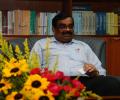
Researchers at IIT Kharagpur, in collaboration with the University of Illinois Urbana-Champaign, have developed a highly sensitive sensor technology. This innovation allows ordinary smartphone cameras to detect extremely tiny, invisible objects, potentially leading to low-cost, portable medical testing and other applications requiring the detection of minute substances.
Pepsi has set up its research centre in China, first of its kind outside the United States, to develop food and beverages to suit the\ntastes of 1.3 billion Chinese consumers.

Their message is blunt: Public scientific wealth should not be transferred at what they describe as 'throwaway prices'.capability, recruitment, promotional avenues and the voice of its employees.

India remains one of the Hyundai Motor group's most important and strategic markets globally. The initiative positions India as a strategic core market for the group's growth, emerging market expansion, and next-generation automotive innovation.

IIM Indore will conduct a study on teenage cricket sensation Vaibhav Sooryavanshi to understand the impact of early fame and pressure on child prodigies.

'It seems the prime minister may not be given the real picture about the country's space sector and ISRO. So, we are having the seminar to bring the issues to his notice.'

'There is a long set of decisions that have to be made along the way for anything to actually get actuated in the real world.'

The BCCI has opened applications for the Head of Sports Science and Medicine position at its Centre of Excellence, a role that has remained vacant since March 2025 despite previous attempts to fill it. The successful candidate will provide strategic leadership for sports science and medicine services, focusing on player welfare, injury prevention, and rehabilitation for elite Indian cricketers.

'Our research demonstrates the potential of perovskite-based semiconductor technologies for next-generation solar cells and memory devices.'

SCTIMST and Invasive Technologies have launched "Chitra Core," a new drug-eluting coronary stent designed with significantly less metal to reduce complications. This indigenous innovation, developed in collaboration, aims to provide advanced and cost-effective cardiac care, building on decades of Indian medical device development. The institute is also developing a unique TiN-coated stent for global markets.

The National Council of Educational Research and Training has reconstituted the Textbook Development Team for class 11 and 12 political science with a mandate to integrate cultural rootedness, Indian knowledge systems and inclusion, with at least four of the members having direct or indirect links with the RSS.
West Bengal has launched an Emerging Quantum and Semiconductor Technologies (EQST) section at CSIR-CGCRI to attract investments and position the state as a hub for next-generation technology. Minister Kalyan Chakraborti highlighted India's need to invest in these crucial sectors and outlined the state's plans to collaborate with institutions and leverage budget initiatives to foster research and start-ups.
Researchers have developed a new atomic clock using the element lutetium, which they claim is the most stable and accurate in the world. This clock can measure a trillionth of a second precisely and is highly resilient to environmental changes like temperature and magnetic fields, making it a significant advancement in timekeeping technology.

HCLTech, India's third-largest IT services company, announced plans to establish a global technology centre and an AI-optimised data centre in Bhubaneswar, Odisha, with a total investment of approximately Rs 15,000 crore, marking its entry into the AI infrastructure business.

India's cybersecurity agency, CERT-In, has issued a critical advisory warning about autonomous AI agents accessing sensitive data of Indian organisations without authorisation. Government sources on Friday emphasised the need for companies to bolster cybersecurity measures and monitor system activity, noting that while no major compromise occurred, the incident serves as an early warning. Future AI regulation is expected to address the risks posed by these agents.

'My biggest fear about AI is that humans are going to rush to deploy it before AI is ready.'

Dedicated Ayush dispensaries increased from 26,130 in 2013-2014 to 37,804 in 2024-2025, while hospitals rose much more slowly, from 3,605 to 3,885.

India's real estate sector recorded an unprecedented $9.5 billion in capital inflows during Q3 2026, primarily driven by foreign investors' strong interest in data centres, according to a CBRE Group report.

Nine employee associations at ISRO have written to Chairperson V Narayanan, seeking official clarification on the proposed transfer of manufacturing and operational functions to private entities. They raised concerns about ISRO's future role, employee consequences, and recruitment, following comments by IN-SPACe chairperson Pawan Goenka regarding ISRO's eventual exit from launch vehicle manufacturing.

IT Minister Ashwini Vaishnaw announced that the Indian government will release a consultation paper on AI regulations within a month. This framework will address critical aspects like AI safety, deepfakes, and a human-first approach, emphasising the industry's primary responsibility in ensuring safe AI deployment. The move comes amidst growing global concerns over AI risks and the need for robust safeguards.

Specialised range taking shape in Andhra Pradesh, while West Bengal clears way for DRDO's new testing facility.
Researchers from the Indian Institute of Science (IISc) and Technical University of Denmark have developed a recombinant antivenom that provides broad protection against the venom of spectacled cobras, monocled cobras, and Indian king cobra species in mice. This lab-produced antivenom offers a next-generation solution to traditional animal-derived antivenoms, addressing issues like variability and limited species coverage.
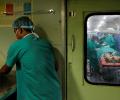
Prof Ajit Kumar Chaturvedi, Vice-Chancellor of Banaras Hindu University, highlighted Artificial Intelligence's transformative potential in healthcare, emphasising its role in augmenting doctors' capabilities and enhancing efficiency. Speaking at PGIMER's Foundation Day, he stressed the need for India to develop AI solutions tailored to its unique healthcare realities, moving beyond being a mere consumer of Western-trained systems. PGIMER Director Vivek Lal also detailed the institute's expansion and commitment to affordable healthcare.

Karnataka Chief Minister D K Shivakumar announced the establishment of India's first government-driven Artificial Intelligence University and an AI Hub in Bengaluru. This initiative aims to position Karnataka as a global leader in responsible AI innovation, fostering talent, research, and collaboration. The state seeks to become an AI-native state, leveraging AI to improve governance and daily life across various sectors.
The Centre for Studies of International Relations (CSIR) has established the International Centre for Civilizational Studies "Manas and Mahabharata" in Bishkek, Kyrgyzstan, in collaboration with the Manas National Academy. The inauguration also saw the release of the first Hindi translation of the Kyrgyz epic "Manas," aiming to foster scientific, educational, and cultural cooperation between India and Kyrgyzstan.

The Reserve Bank of India's 25-basis point increase in the repo rate to 5.5 per cent is expected to exert pressure on housing affordability and buyer sentiment, particularly affecting interest rate-sensitive segments and potentially moderating sales during the crucial festival season.
Researchers at BRIC-RGCB in Thiruvananthapuram have developed a novel nanopore-based sensing technology. This innovation allows for the early and highly sensitive detection of biomarkers associated with neurodegenerative diseases like Parkinson's and ALS, addressing a critical challenge in current diagnostic methods. The technology, published in Nature Nanotechnology, uses self-assembling dual-diameter nanopore sensors to identify disease-specific biomarkers even at low concentrations.

'I don't think the government will sacrifice such a fine institution for monetary gains.'

Two IIT Gandhinagar students have developed "TrustGate," an AI-based cybersecurity system designed to protect critical infrastructure like water treatment plants and power grids. The system uniquely combines network traffic and physical sensor data to detect sophisticated cyber attacks, identify affected equipment, and provide real-time alerts to operators, earning them an international award.
